
Fabric Conveyor Belt
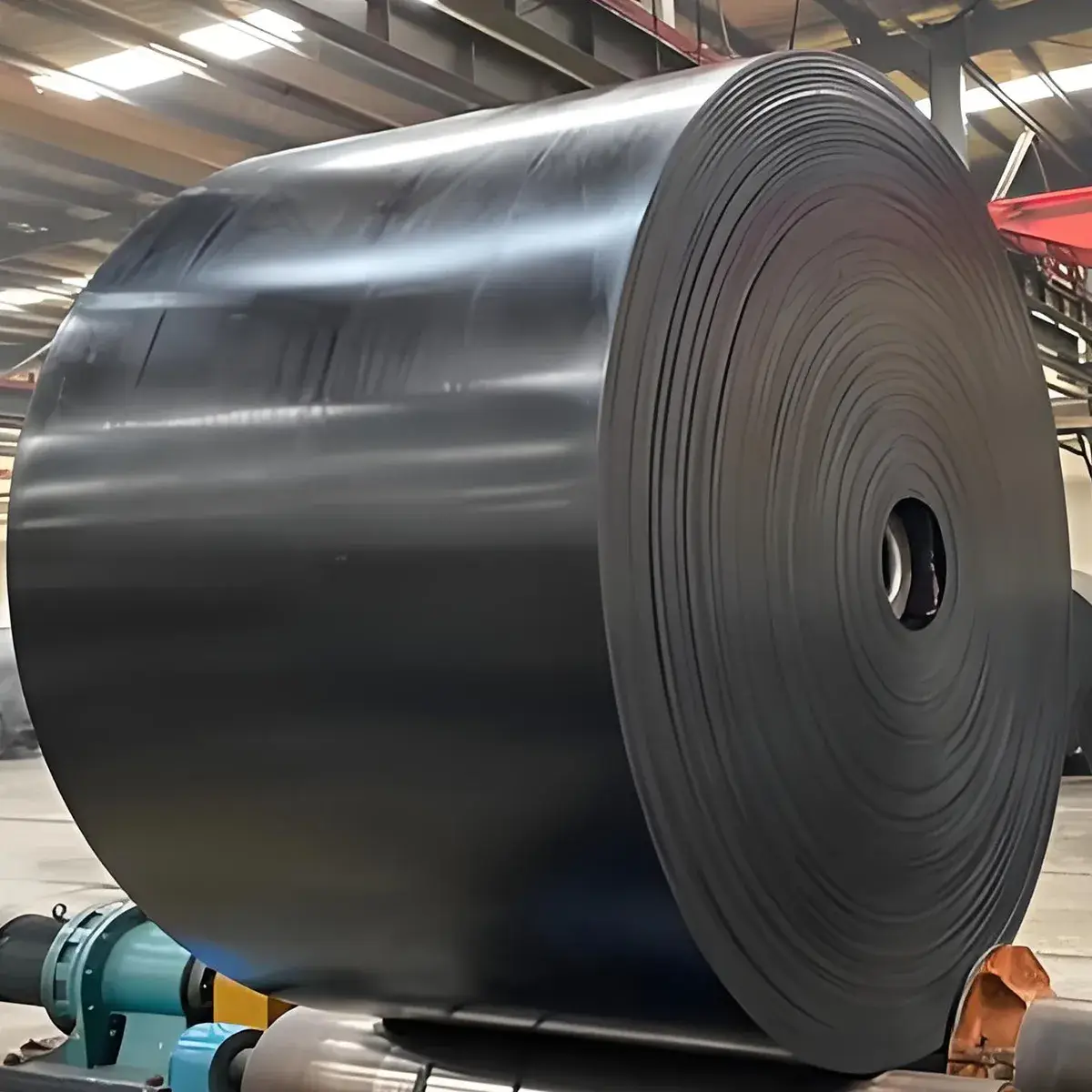
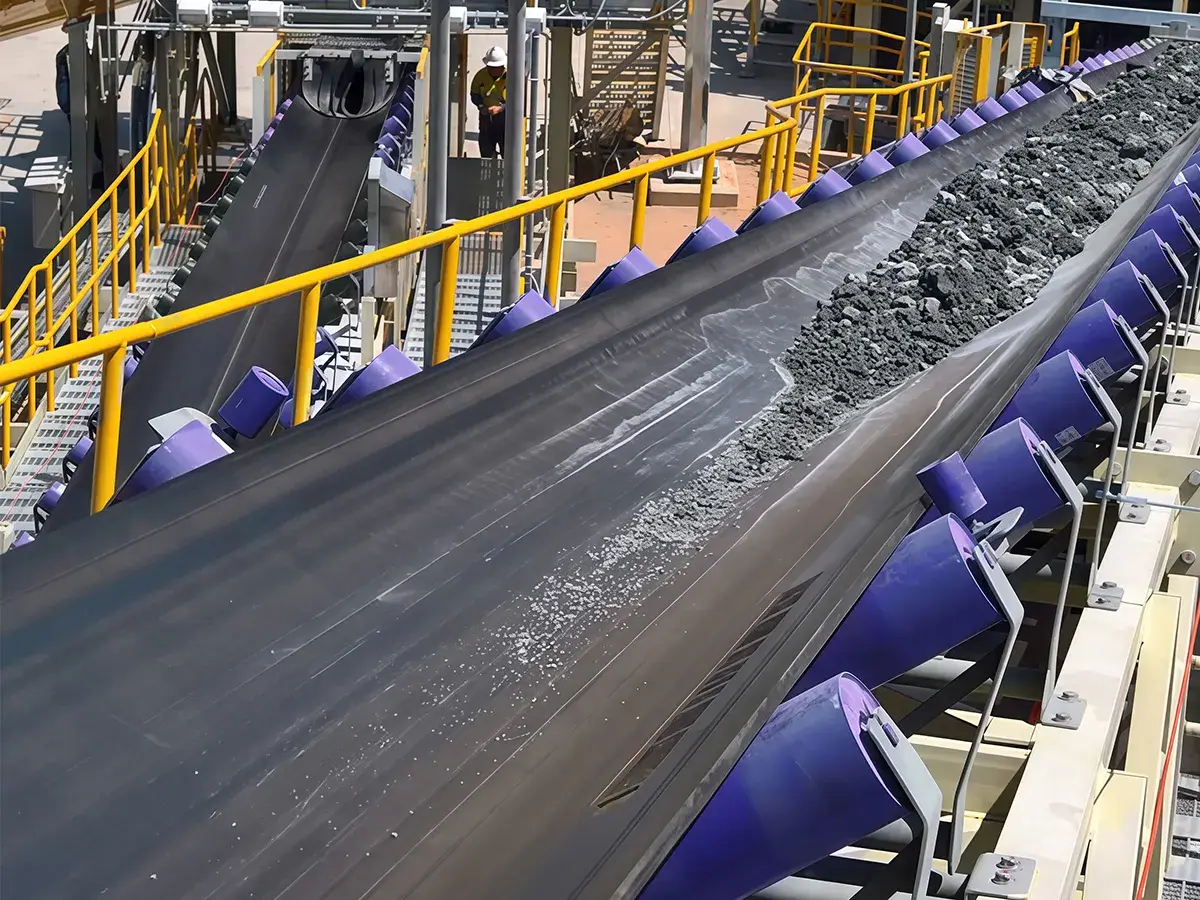
Multi-ply fabric conveyor belts consist of several layers of textile fabric serving as the carcass, which are bonded together and encased in rubber cover layers. The carcass is generally composed of cotton (CC), nylon (NN), or polyester (EP) fabric, providing the belt with significant strength and dimensional stability. These belts, available in heat-resistant, cold-resistant, oil-resistant, acid/alkali-resistant, and abrasion-resistant grades, are suitable for short to medium-long transporting lengths and have been tested to ISO9001: 2015 standards. They are extensively utilised in coal, mining, ports, metallurgy, power generation, and chemical processing.
-
Polyester (EP) Fabric Belt
The EP belt employs polyester fabric as its carcass, consisting of numerous polyester layers connected sequentially beneath a rubber cover, designed for medium to long distances, elevated loads, and high-speed conveyance.
View Products- High tensile modulus means very low elastic elongation under tension and load, so the belt runs stably and needs shorter take-up.
- Polyester's non-hydrophilic, chemically inert structure resists hydrolysis, mildew, and degradation in high-humidity, submerged, or outdoor conditions, and stands up to acids, alkalis, and most organic solvents.
-
Nylon (NN) Fabric Belt
The NN belt employs nylon fabric plies as its carcass for the short- to medium-distance transportation of non-corrosive, non-abrasive bulk and unit materials such as coal, coke, sand, gravel, and cement across sectors including chemical, electricity, metallurgy, light industrial, food processing, and coal mining.
View Products- Excellent elasticity delivers outstanding flex and impact resistance under continuous load, cushioning the shock of falling material and extending belt life.
- A soft, elastic nylon carcass gives excellent troughability under both empty and heavy loads, keeping material flow steady and tracking true.
-
Cotton (CC) Fabric Belt
The CC belt comprises many layers of cotton or polyester-cotton (terylene) fabric, processed through calendering, shaping, and vulcanisation, designed for short- to medium-distance transport in mining, cement plants, steel and metallurgy industries, construction sites, and ports.
View Products- During vulcanization, rubber penetrates fully into the cotton fibers for high inter-ply adhesion, so the belt rarely delaminates under long-term flexing, vibration, and shear.
- As a natural fiber, cotton stays dimensionally stable within its rated temperature range without significant heat shrinkage.