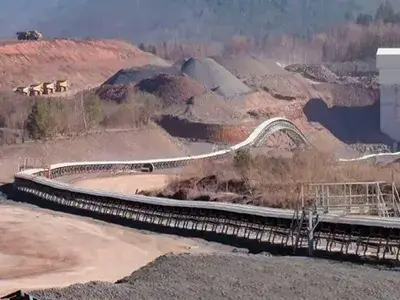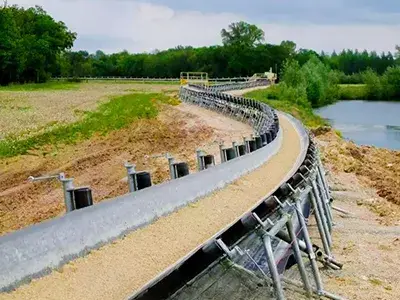
Industrial Conveyor Belts
Steel Cord Conveyor Belt
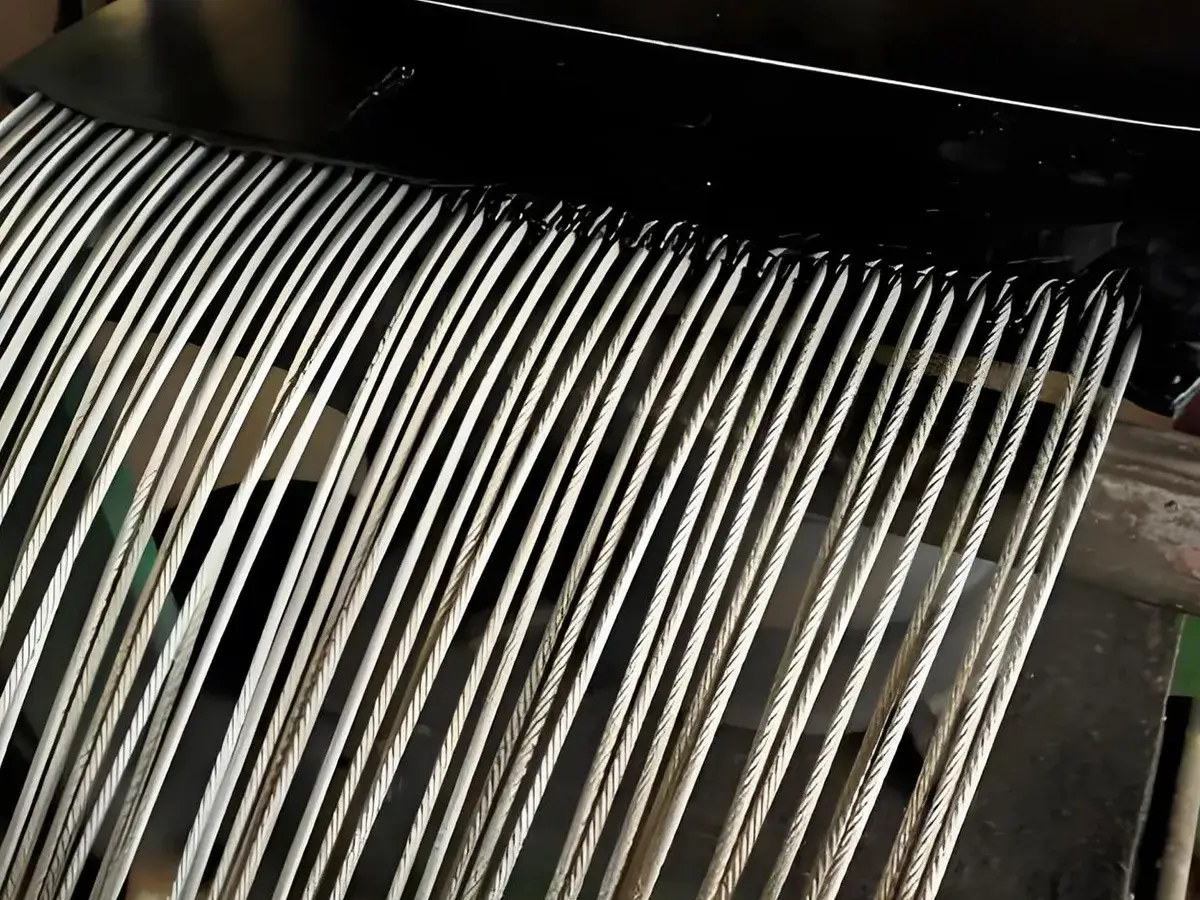
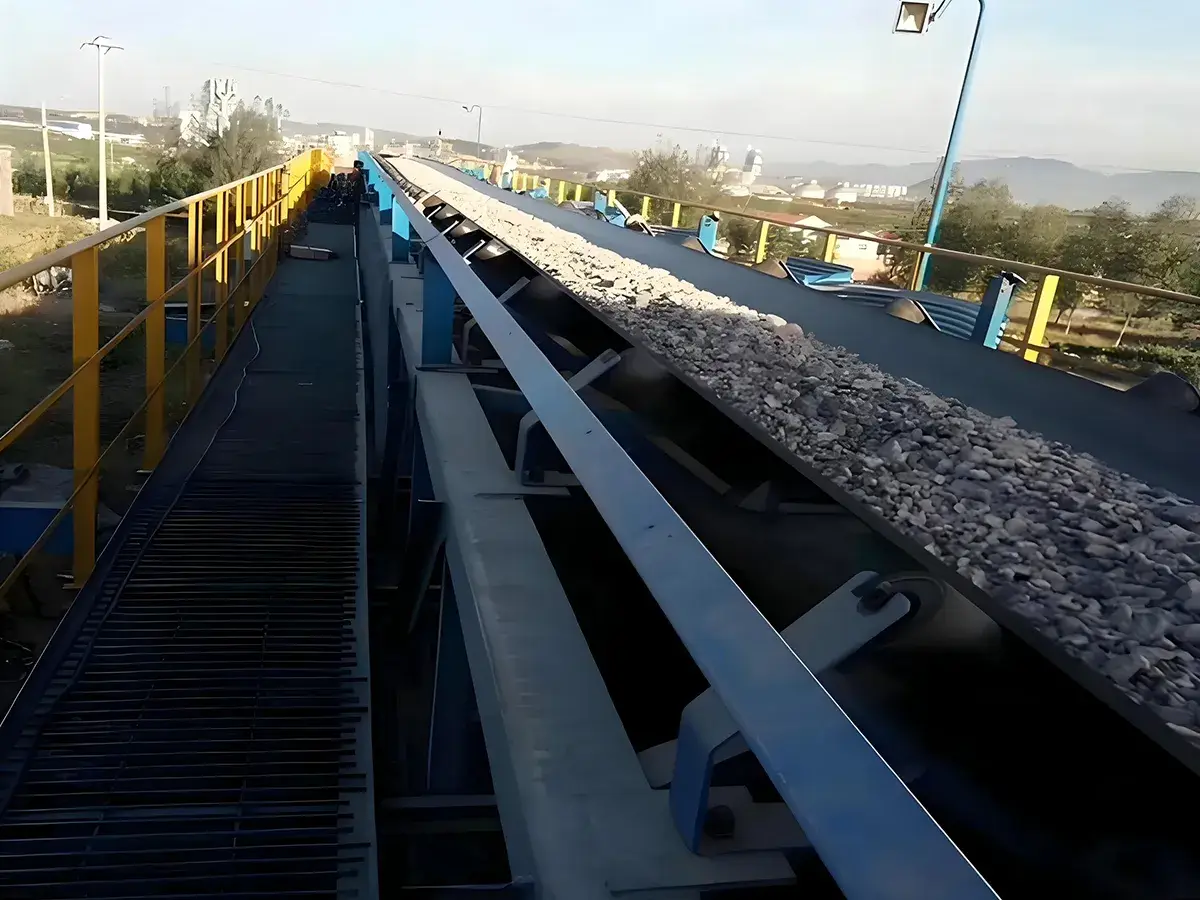
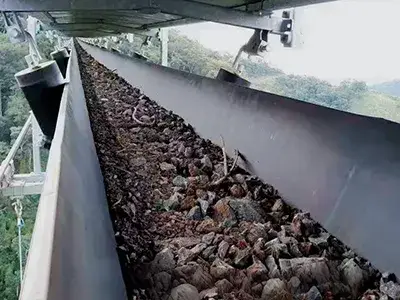
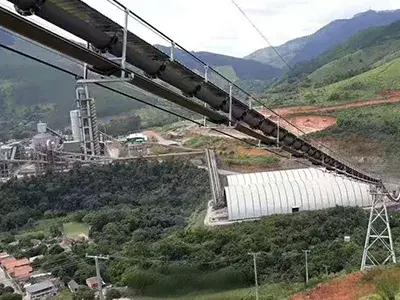
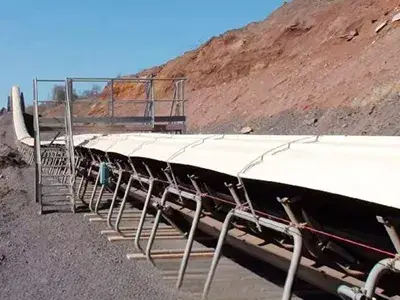
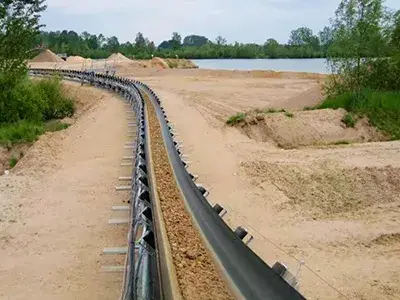
Steel cord conveyor belts utilise steel cords as the core structure behind a rubber exterior, resulting in a high-strength belt composed of core rubber, steel cords, cover layers, and edge rubber. They are designed for robust, long-range, high-capacity, high-velocity transport in coal, mining, port, metallurgy, power, chemical, cement, construction materials, and tunnel boring (TBM) applications.
Key Advantages
- The galvanized steel cords bond completely with the penetrating core rubber, strongly resisting inter-layer separation.
- The metal carcass is fully compatible with coil sensors, X-ray rip-detection, and microwave inspection systems, enabling non-destructive, online, real-time warning of cord breaks, splice slippage, and longitudinal rip.
- A dense longitudinal cord network combined with high-performance cover rubber absorbs energy and cushions impact, resisting large, sharp material at heavy-load loading points.
- When the cover wears, but the cords remain sound, the belt can be re-clad and re-vulcanized for reuse; at end of life, its metal and rubber content retains significant recycling value.
Classification
- By Cover Performance: standard, flame-retardant, cold-resistant, abrasion-resistant, heat-resistant, and acid/alkali-resistant.
- By Internal Structure: standard construction and transverse-reinforced (rip-resistant). Rip-resistant belts carry an added anti-tear breaker for better load support and protection against longitudinal tearing, used mainly for heavy ore and bulk haulage.
- Belt grade varies with cover thickness and density.
-
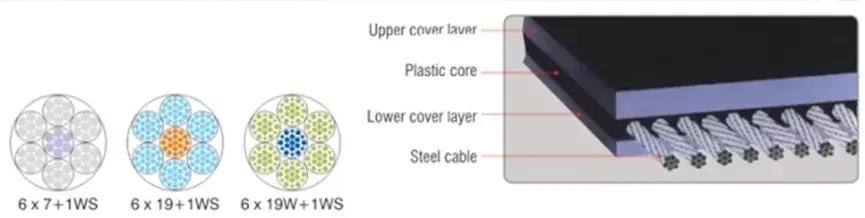 Conveyor belt quality varies according to the thickness and density of the cover rubber
 -
 Reinforced tear-resistant conveyor belt: Incorporates a tear-resistant mesh that improves load-bearing capacity and prevents longitudinal tearing; primarily used for transporting heavy materials such as ore
Parameter
| Adhesion of steel cord | ||
| Strength | Adhesion, N/mm, GB9770-88 | Adhesion, N/mm, DIN22131-88 |
| ST600 | 54 | 60 |
| ST800 | 60 | 70 |
| ST1000 | 64 | 80 |
| ST1250 | 69 | 95 |
| ST1600 | 74 | 105 |
| ST2000 | 84 | 105 |
| ST2500 | 98 | 130 |
| ST3150 | 108 | 140 |
| ST4000 | 118 | 145 |
| ST4500 | 150 | |
| ST5000 | 165 | |
| ST5400 | 175 | |
| ST6300 | 180 | |
| Main Technical Data Execution standard GB/T9770 International | |||||||||||||
| Item | Steel Cord umber |
Width mm | Min. Pulley Diameter mm |
||||||||||
| 2m | Cord Diameter Wm |
Cord Pitch ±15mm |
Top Cover mm |
Bottom Cover mm |
800 | 1000 | 1200 | 1400 | 1600 | 1800 | |||
| St630 | 630 | 3.00 | 10 | 5 | 5 | 75 | 95 | 113 | 133 | 151 | 500 | ||
| St800 | 800 | 3.50 | 10 | 5 | 5 | 75 | 95 | 113 | 133 | 151 | 171 | 500 | |
| St1000 | 1000 | 4.00 | 12 | 6 | 6 | 63 | 79 | 94 | 111 | 126 | 143 | 630 | |
| St1250 | 1250 | 4.50 | 12 | o | 6 | 63 | 79 | 94 | 111 | 126 | 143 | 800 | |
| St1600 | 1600 | 5.00 | 12 | 6 | 6 | 63 | 79 | 94 | 111 | 120 | 143 | 1000 | |
| St2000 | 2000 | 6.00 | 12 | 8 | 6 | 63 | 79 | 94 | 111 | 126 | 143 | 1000 | |
| St2500 | 2500 | 7.20 | 15 | 8 | 0 | 50 | 64 | 76 | 89 | 101 | 114 | 1250 | |
| St3150 | 3150 | 8.10 | 15 | 8 | 8 | 50 | 64 | 76 | 89 | 101 | 114 | 1400 | |
| St3500 | 3500 | 8.60 | 15 | 8 | 8 | 50 | 64 | 77 | 90 | 104 | 117 | 1600 | |
| St4000 | 4000 | 8.90 | 15 | 8 | 8 | 50 | 64 | 77 | 90 | 104 | 117 | 1600 | |
Recommended Minimum Pulley Diameters for Conveyors Using Steel-Cord Conveyor Belts
| Type | Minimum Diameter (mm) |
| ST630 | 800 |
| St800 | 800 |
| St1000 | 800 |
| ST1250 | 800 |
| ST1600 | 1000 |
| ST2000 | 1000 |
| ST2500 | 1250 |
| ST3150 | 1400 |
| ST3500 | 1400 |
| ST400 | 1400 |
| ST4500 | 1800 |
| ST5000 | 2000 |
| ST5400 | 2000 |
| ST6000 | 2000 |
Implementation Standards and Key Specifications for Steel Cord Conveyor Belts
| Variety | Standards and Key Indicators |
| Standard type | GB/59770 DIN22131 JIS-L 6369:2000 |
| Flame-retardant type | MT668 HG2539 ||Type DIN22131 JIS-K 6324:2000 |
| General flame-retardant type | HG2539 | Type DIN22103 DIN22121 |
| Flame-resistant type | HG/T2297 ISO4195 |
| Wear-resistant type | Shaoboer wear rate is less than or equal to 90mm³ |
| Heat-resistant and wear-resistant type | Withstands temperatures up to 125°C; Shore abrasion loss is less than or equal to 150mm³ |
| Acid-, alkali-, and oil-resistant type | HG4-846 HG/T 3714-2003 RMA (MOR OF) |
| Cold-resistant type | brittleness temperature -20℃~-50℃ HG/T 3647-1999 |
| Ozone-resistant type | Ozone concentration 50x10-6m³40℃/72h (Does not crack) |
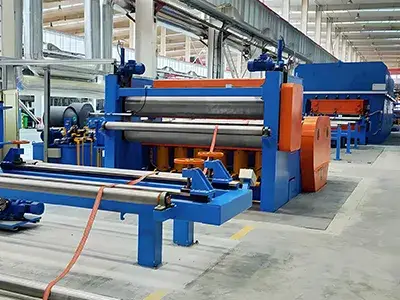
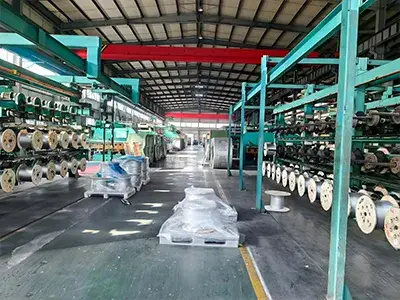
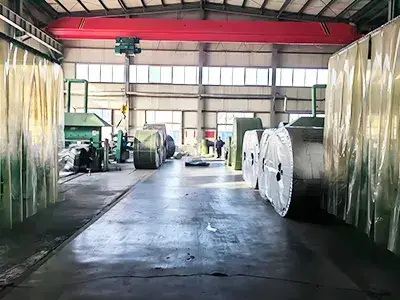
Production Workshop
Customer Site