
Industrial Conveyor Belts
Polyester (EP) Fabric Belt
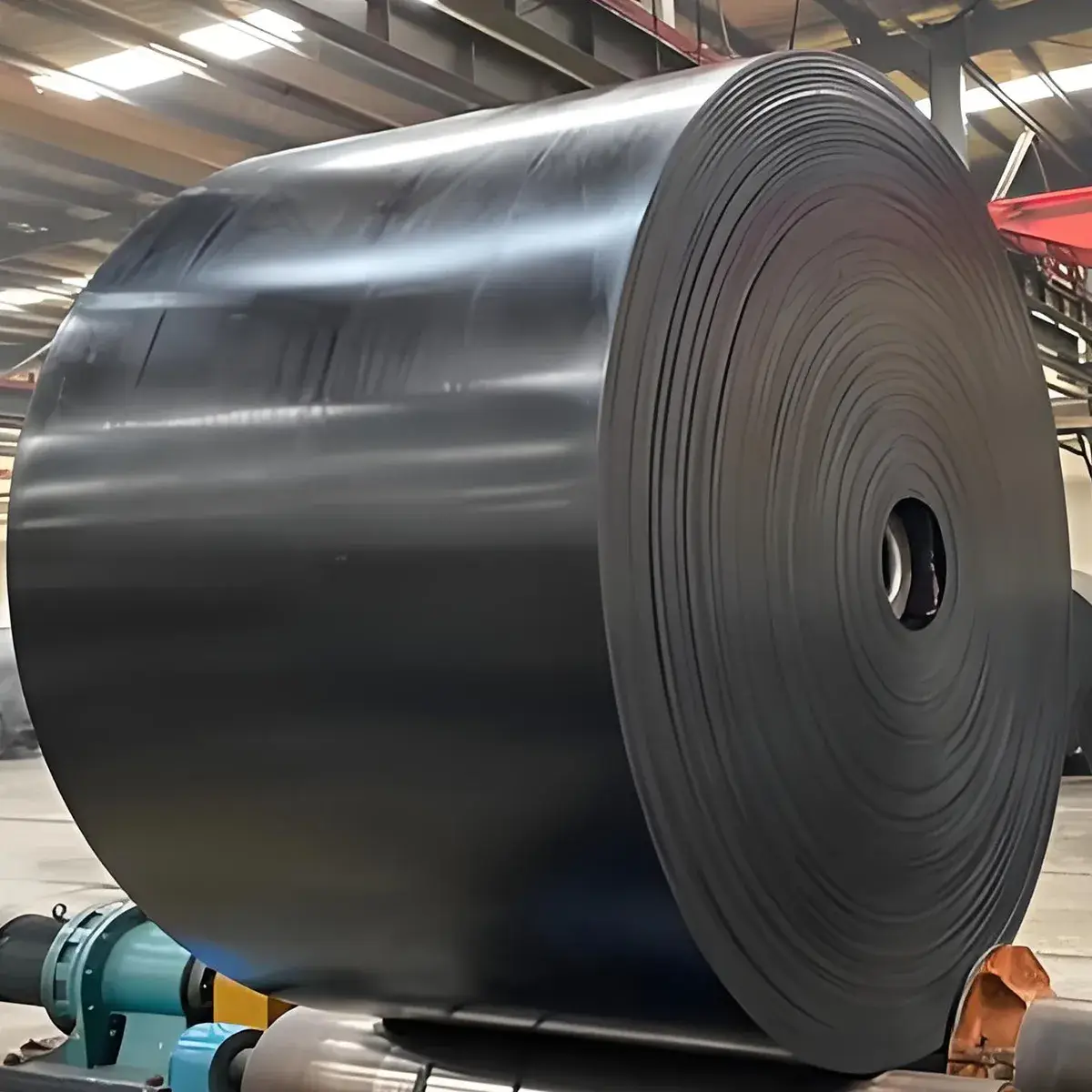
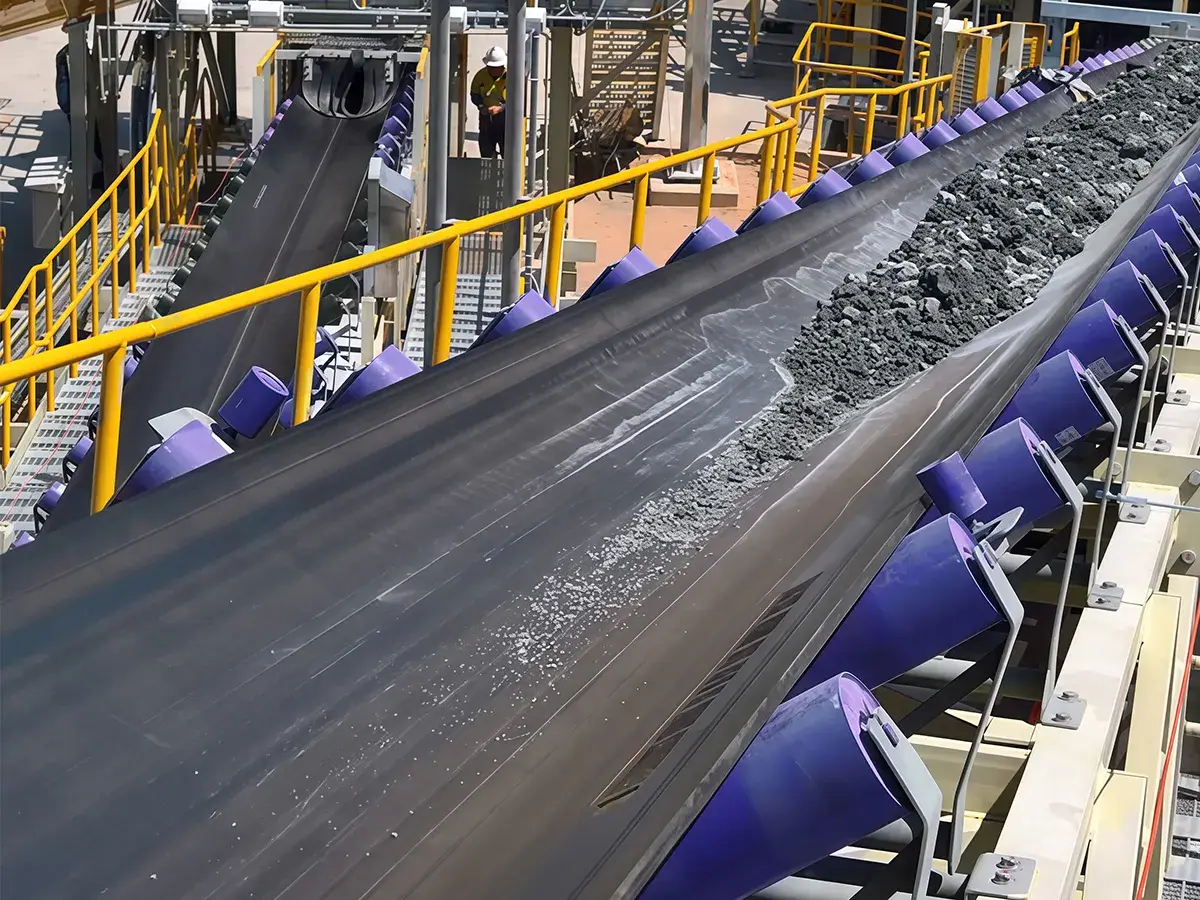
The EP belt employs polyester fabric as its carcass, consisting of numerous polyester layers connected sequentially beneath a rubber cover, designed for medium to long distances, elevated loads, and high-speed conveyance.
Key Advantages
- High tensile modulus means very low elastic elongation under tension and load, so the belt runs stably and needs shorter take-up.
- Polyester's non-hydrophilic, chemically inert structure resists hydrolysis, mildew, and degradation in high-humidity, submerged, or outdoor conditions, and stands up to acids, alkalis, and most organic solvents.
- Low sensitivity to temperature change keeps the belt dimensionally stable under moderate heat (such as carrying warm materials) or severe cold, preventing mistracking and snaking.
Parameter
| Adhesion and Elongation Property | |||||
| Belt Core Material | Bonding Strength | elongation | |||
| Between Plies (N/mm) |
Between Cover and Fabric Ply N/mm |
Longitudinal Elongation at Break s 2 |
Longitudinal Reference Force Elongation %s |
||
| Thickness of Cover Layer≤1.5mm |
Thickness of Cover 21.5mm |
||||
| Polyester canvas | ≥5 | ≥4.5 | 25 | ≥10% | ≤4% |
| Specification and Technical Parameter of Polyester Multi-ply Fabric Conveyor Belt | ||||||||||
| Fabric type | Fabric Texture | Fabric Type | Fabric Thickness (mm/p) |
Strength Series(N/mm) | Thickness of Cover Rubber WW |
Width Range (mm) |
||||
| Warp | Weft | 2 ply | 3 ply | 4 ply | Top Cover Rubber |
Bottom Cover Rubber |
||||
| Polyester (EP) |
Polyester (E P) |
Polyamide (P) |
EP-80 | 1.00 | 160 | 240 | 320 | 0~12 | 0~10 | 300~6000 |
| EP-100 | 1.00 | 200 | 300 | 400 | ||||||
| EP-125 | 1.05 | 250 | 375 | 500 | ||||||
| EP-150 | 1.10 | 300 | 450 | 600 | ||||||
| EP-170 | 1.10 | 340 | 510 | 680 | ||||||
| EP-200 | 1.20 | 400 | 600 | 800 | ||||||
| EP-250 | 1.40 | 500 | 750 | 1000 | ||||||
| EP-300 | 1.60 | 600 | 900 | 1200 | ||||||
| EP-350 | 1.70 | - | 1050 | 1400 | ||||||
| EP-400 | 1.90 | - | - | 1600 | ||||||
| EP-500 | 2.10 | - | - | 2000 | ||||||
| Classification of Cover Rubber as follows | |||||
| Cover Grade | Tensile Strength≥ | Elongation at Break≥ | Wear Loss | Tensile Strength and Elongation at Break after Aging |
|
| MPa | Kgf/m² | % | m³ | % | |
| M | 24 | 240 | 450 | 125 | -25~+25 |
| W | 18 | 180 | 400 | 90 | -25~+25 |
| Z | 15 | 150 | 350 | 200 | -25~+25 |